Showing posts with label Environment. Show all posts

Wednesday, December 18, 2024

UVU Sustainability Tour: Water

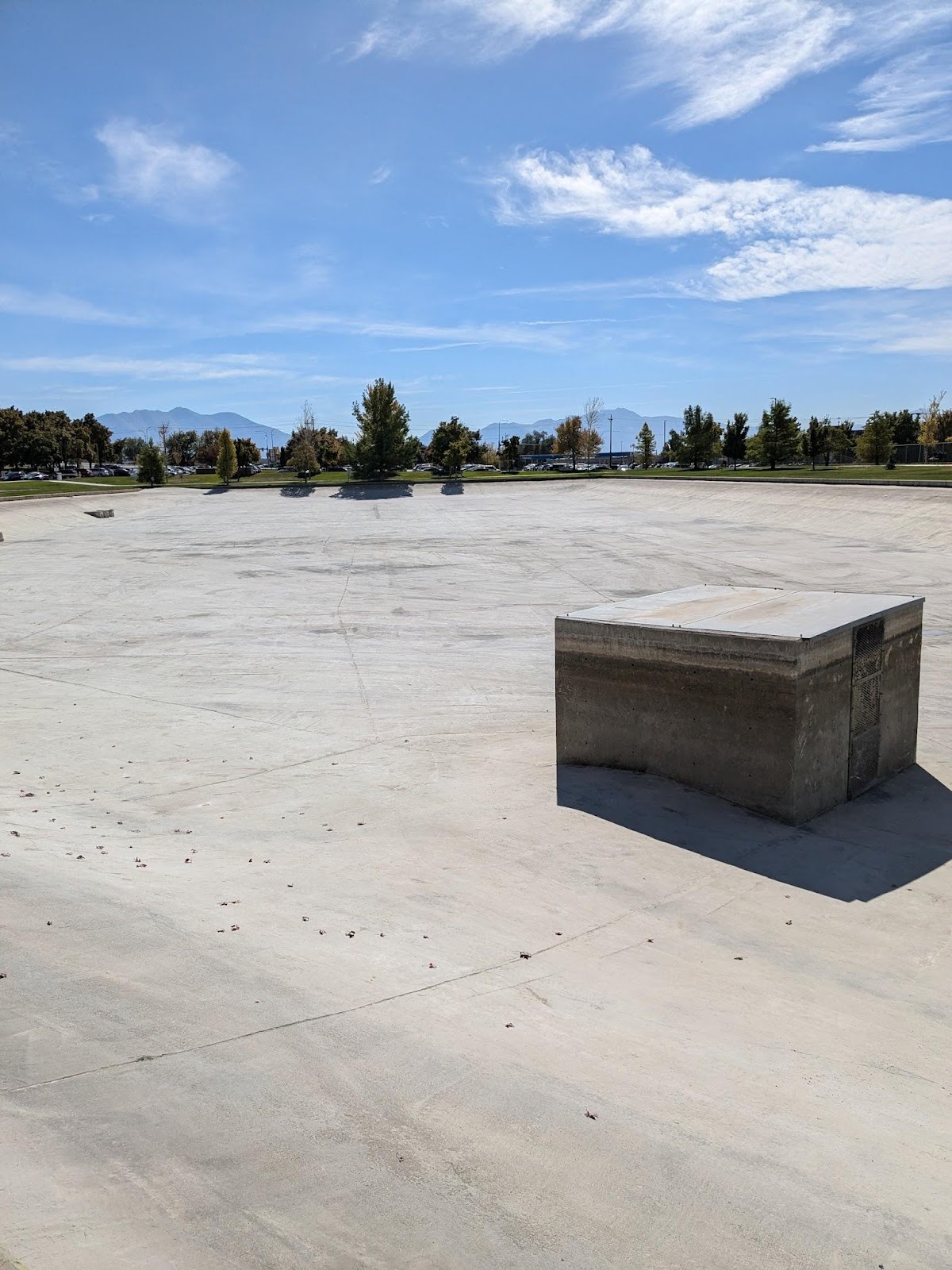
    I love seeing the giant reflection pools outside of the BA building with that water spraying up, and I always wondered how they could justify that water when Utah had drought restrictions. During our sustainability tour, the gentlemen from facilities were able to answer so many of those questions, and really put UVU’s water consumption and conservation into perspective for me.

    I worked for Alpine School District as a head custodian for 9 years between 2013 and 2022. During that time I was in charge of a lot of the same things facilities explained to us on our tour, but on a much smaller scale. My area was just one elementary school as opposed to one University. I had to deal with the water restrictions during dry years, events or soccer games at the last minute and someone calling me to come shut off the water, broken sprinkler lines (and not knowing when one was broken until someone notified me), dying bushes or trees and having to replace them because they were not getting enough water, wind carrying the mist from small sprinklers and so the edges getting brown on small strips off lawn, and so much more. I received one of those fancy digital sprinkler clocks that hooked to my phone and it made my life so much easier. I was able to see weather patterns, and it would turn off the sprinklers when it rained. If a sprinkler broke, it would turn off that section and alert me instead of shooting a giant stream of water straight into the air for hours on end. The new technology was amazing and probably saved the district a lot of money and water. It also saved me a lot of time, energy, and frustration.

    I was able to understand a lot of what they were talking about in the tour as I was one of “them” for many years and loved what I did. I started UVU as a freshman in 1994 (it was UVSC back then) and it has grown a lot in the last 30 years. There are many more buildings, and more grassy areas. There are more parking lots and concrete walkways connecting them all together. As the school is growing in size by building and mass, it is also growing with people and that means more feet that walk over that grass. I think they are really taking all that into account, as they mentioned that they are adding compost to the water that will help the roots become stronger and thicker, to stand up to the extra amount of wear and tear so that it endures more people walking on it, sitting on it, playin on it. They are seeing the bigger picture, and they know they need to keep looking outside of that even further as the school continues to expand, so that they can keep up with technology and sustainability efforts, even if they may seem small.


[Written for SOC 3520 class UVU Fall 2024]
aB . All Rights Reserved . 2024

Wednesday, December 11, 2024

GRIT Garden at UVU

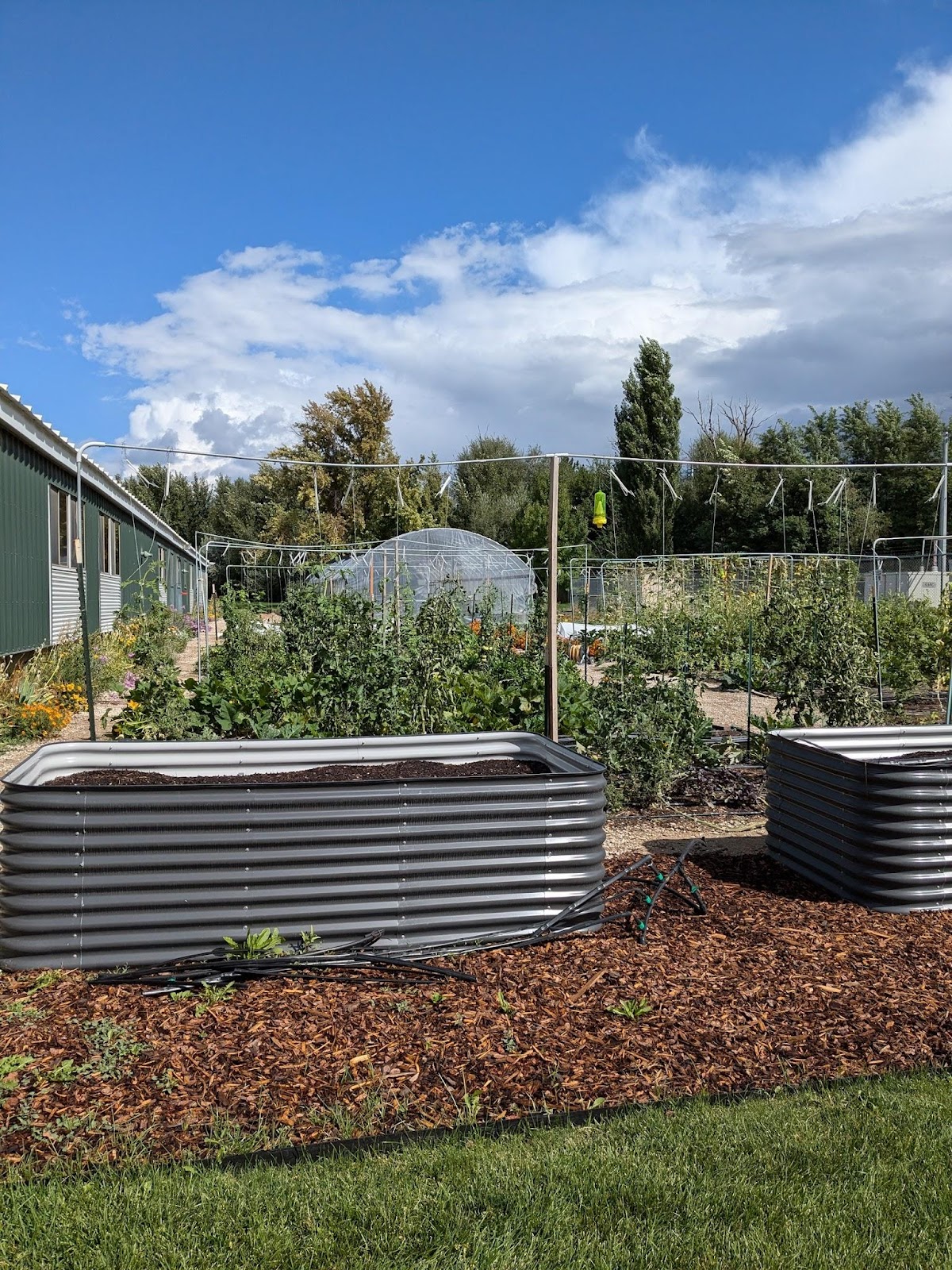
    I have driven past the GRIT garden many times over the years, but never realized what it was until we paid it a visit for class.

    I have tried, unsuccessfully, to start my own small garden many times in Utah, and so it was validating to hear that some of the times it was not my fault. The soil in Utah is hard to plant in, and I think I have been trying to grow some of the wrong things most of the times I tried. We also moved around a lot, and so starting over gets exhausting and giving up on a garden is much easier with kids.

    Learning about the natural pesticides (marigolds) and planting certain crops together so that they help each other, was so much good information to learn. While I now live in a small townhome with a concrete backyard (no room for a garden), I do have a sister with a big garden with whom I will share my newfound wisdom. I love the fact that there are opportunities to volunteer in the GRIT garden for those of us who do not have a garden at home anymore, or for those who may want to benefit from the free food that comes out of the garden each week. While students are not required to spend their time in the garden in exchange for the free food, they are more than welcome to come learn some tips and tricks for their own future gardens.

    Seeing the GRIT garden was a great addition for this class as food is a major part of our environment. Knowing where our food comes from, how it has been processed, which chemicals have been used, how many hands/companies were involved before we purchase it, and what kind of damage it has done to our environment in the meantime, is all part of environmental sociology. Taking the middle man (or in some cases many middle men) out, and growing your own produce, or going to the farmers market and supporting those local to you by buying produce from them, can eliminate some of those environmental concerns. Food, and knowing where it comes from, or which company is responsible for it, has always been a big thing for me. I try to be very conscious of what I eat. I am picky about where I shop, and seldom eat animal products because of countless books and documentaries I have read and seen about the processes that go on there. Our country's consumption of meat is outrageous, and don’t even get me started on what that industry adds to the effects on the environment, because that is a soap box I will never get down from.


[Written for SOC 3520 class UVU Fall 2024]
aB . All Right Reserved . 2024

Tuesday, December 10, 2024

Utah Lakeshore Cleanup at Sunset Beach Park, Vineyard.

     Environmental problems are social problems and since we are the ones that have created the problem, we should be the ones to go out to clean up our mess.

    Environmental sociology is the study of community in the largest sense possible as we are studying the community for all. We really are in a new period of life where humans impact climate and the ecosystem more than we have ever before. So much so, that they decided to switch to a new era and name this one we are in right now the anthropecene.

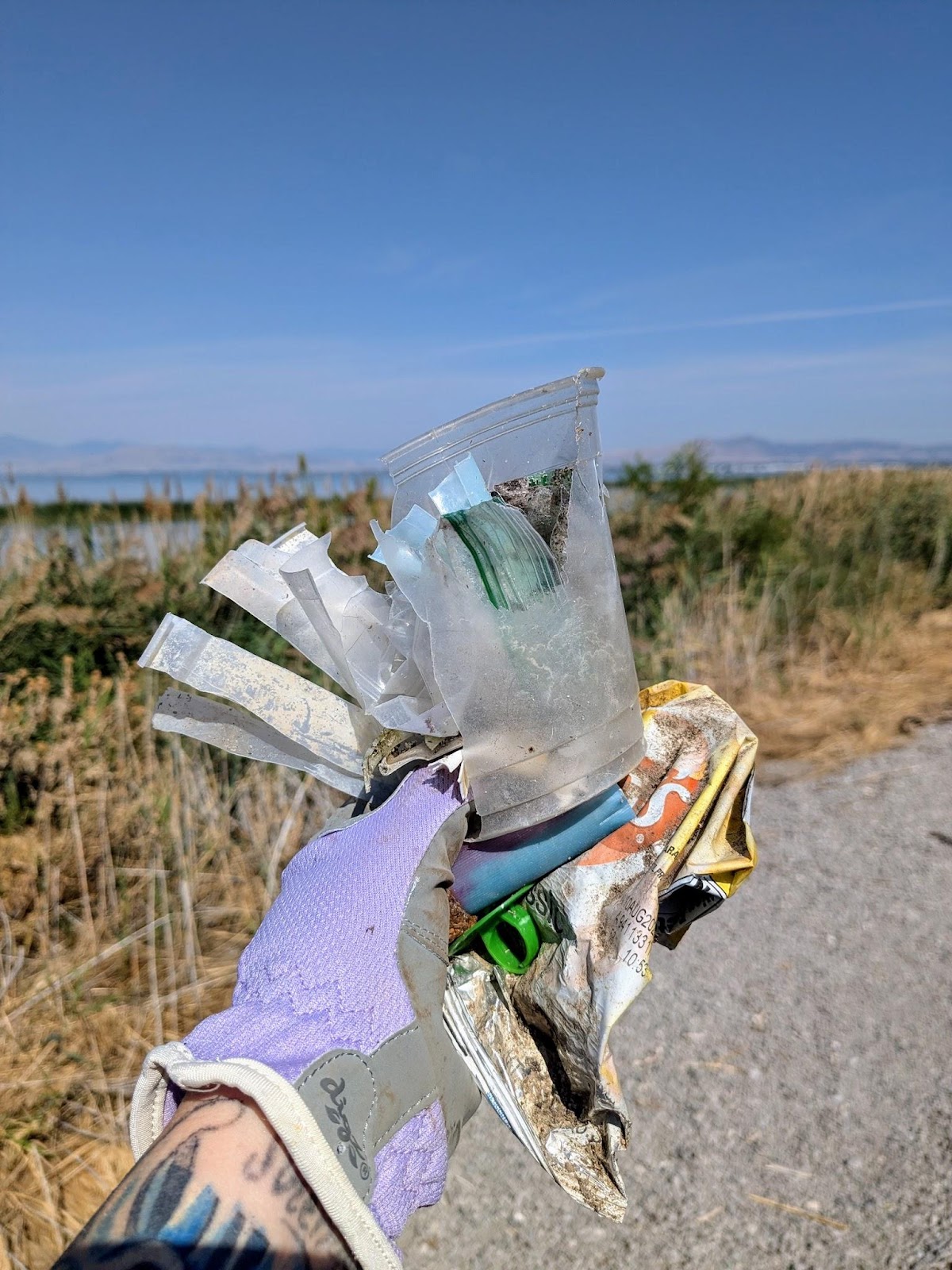
    I can see the effects of our impact on the world all around me, and so when I had the opportunity to come help for an hour on a Saturday, even if it was to only find a handful of trash, I knew it was worth it.

    I have tried to be aware of my footprint on this earth for a long time and know that my personal attempts to be more mindful is small in the larger scheme of things, but still valuable. I try to be conscious of my energy use at home by replacing outdated appliances with energy efficient ones when possible. I own a fuel efficient vehicle and use public transportation or my bike when I can. I change my air filters in my home regularly, and open my windows instead of running the air conditioner if I can. I have a low-flow shower head and try not to use any single plastic items when I can. I sort all my garbage and take my recycling to the recycling center in town every few weeks among many other things.

    My efforts are but a small drop in the bucket, and I am not sure how impactful they are. As far as I am concerned, I feel I am making a difference, and I feel better about how I am leaving this world behind for my kids.


[Written for SOC 3520 class UVU Fall 2024]
aB . All Right Reserved . 2024

Monday, December 9, 2024

Treadmill of Destruction

How does a sociological viewpoint give us a unique insight into the material environments surrounding us? And how does environmental awareness shape our sociological perspective?

    If we look at nature from a biological perspective we can refer to it as being the physical world including the plants, animals, landscapes, and other features not created by human hands. When we bring a sociological perspective into it, we start to look at human interaction with nature and how we have introduced things like pollution and scarcity of resources because of our disregard for the environment around us.

    Gregory Hooks and Chad Smith examine the environmental inequalities endured by the Native American populations living on the reservations assigned to them by the United States government in the paper titled “Treadmill of Destruction.” They provide evidence in this paper that the U.S. military knowingly used Native American land as a dumping ground for hazardous material and a place to “produce, test, and deploy weapons of unprecedented toxicity.” (Hooks and Smith, 558–75)

    The forced relocation of Native Americans onto reservations came without their consent and choice of land. To many, the new land was unfamiliar and vastly different from their original homelands which meant having to adapt to a new climate, landscape, and ecosystem. The land quality was poor making it difficult for traditional agricultural practices and hunting which led to food shortages and economic hardships. The reservations were also isolated and far away from any other signs of civilization.

    Starting in the 1940s, Uranium has been mined on Native American land leading to environmental contamination and severe health problems to those living in the area. (Nuclear War) During World War II, the United States military used Native American land for their bombing ranges in places such as Alaska, Arizona, California, Minnesota, Nevada, New Mexico, and South Dakota. (On Dangerous Ground) From 1951 to 1992 the United States government did nuclear testing on Native American lands in Nevada releasing radioactive plumes into the air affecting nearby tribes. (EJ Atlas) In the 1960s, the U.S. Government tested dioxin (a component of Agent Orange) on Native American land in Arizona. (Sanjana Manjeshwar) All of these military activities have resulted in significant impacts on the environment, major health issues for the Native Americans occupying the land, and disruptions to life on the reservations in general.

    Native American tribes have tried to combat all the issues that have stemmed from the years of neglect and abuse they faced as they were seen as second-class citizens living in areas the U.S. military also deemed appropriate to use for the manufacturing of weapons of mass destruction. They are still trying to address the long-term health affects many are suffering from after being exposed to so many hazardous materials. Being part of a minority and marginalized community they already suffer from access to healthcare which now adds additional pressure of educating those still living on the reservations of the existing health hazards around them as well. While it should not be the tribes responsibility to restore the damages done to the environment on their lands, they are also trying to engage in clean up efforts to restore and preserve the natural resources that exist on their land for future generations. The Navajo Nation has also filed lawsuits against the United States government to seek compensation and cleanup for uranium contamination as this is something they can’t clean up themselves.

    The treadmill of destruction is a social issue because it leads to environmental harm that affects all of us. While in the example above the harm is mostly done to those living on Native American reservations, this should be an issue that impacts all humans as we all inhabit this earth together. The environmental impacts and livelihoods of communities are destroyed at the expense of military activities. Marginalized communities such as the Native American populations were already looked on as second class citizens and because of this no safety measures were taken into account during all the years the military used their land with serious repercussions. Suppression of information and lack of transparency from the military created immense health risks for many who had no idea what kind of testing or toxins were released into their communities.

    Another example of this is when the United States military decided to conduct nuclear tests in the Marshall Islands between 1946 and 1958 which displaced the entire local population on the island of Bikini Atoll. They were forcibly relocated, just like the Native Americans, which created severe hardships as their lives were disrupted. The nuclear tests vaporized some of the smaller islands close by and left behind radioactive contamination. The water around the islands became dangerous as well affecting the fishing and farming that the inhabitants were used to. (Hodson, Watson, and Sanchez) The environmental impact of the testing for those years created ripple effects still felt in that area today.

    Sociologists study how human activities contribute to environmental degradation. Awareness of environmental issues and concepts like environmental racism and social inequality are key to understanding how different groups experience environmental hazards differently.

Sources:

EJ Atlas. Available at https://ejatlas.org/conflict/nuclear-testing-in-newe-segobia-western-shoshone-lands-in-nevada-us.

From Issue:  Fall 2023  /  Vol. 24 No. 3 et al., “On Dangerous Ground: Oglala Lakota Land Used as a Bombing Range in World War II Is Still Perilous,” NMAI Magazine. Available at https://www.americanindianmagazine.org/story/Badlands-bombing-range.

Gregory Hooks and Chad L. Smith, “The Treadmill of Destruction: National Sacrifice Areas and Native Americans,” American Sociological Review 69, no. 4 (August 2004) Available at https://doi.org/10.1177/000312240406900405.

Nuclear War: Uranium Mining and Nuclear Tests on Indigenous Lands,” Cultural Survival. Available at https://www.culturalsurvival.org/publications/cultural-survival-quarterly/nuclear-war-uranium-mining-and-nuclear-tests-indigenous.

Simon Hodson Tara Watson and Gabriel R. Sanchez, “Mass Displacement Caused by Conflicts and One-Sided Violence: National and International Responses,” Brookings, July 28, 2016. Available at https://www.brookings.edu/articles/mass-displacement-caused-by-conflicts-and-one-sided-violence-national-and-international-responses/.

Sanjana Manjeshwar “The Lasting Harms of Toxic Exposure in Native American Communities - Berkeley Political Review,” Berkeley Political Review - UC Berkeley’s only nonpartisan political magazine, July 13, 2021.Available at https://bpr.studentorg.berkeley.edu/2021/07/10/the-lasting-harms-of-toxic-exposure-in-native-american-communities/.


[Written for SOC 3520 class UVU Fall 2024]
aB . All Right Reserved . 2024

Wednesday, July 5, 2023

Environmental Issues Short Opinion Paper

What can I personally do to lower my carbon footprint and help the environment?

    I have been waiting all semester for this topic as this is something I have been passionate about for years. Since educating myself many years ago about global warming and the things we personally can do to help it, I have been an advocate and proponent for change in my own family and community. I have researched different ways that I can make changes to how I live my life that will impact my future. I have been met with laughter and resistance by many family members and friends as they do not understand that one person can make a difference. Throughout the years I have not given up being an example and speaking out for my beliefs even when met with ridicule from those around me. I strongly believe in my ability to be a small cog in the larger system to help alleviate some of the damage we do daily to the environment we live in. We are not going to solve these problems until we face the biggest threat, and that’s us, our behaviors. (Doss, 2:00)
    
    So what do I personally do to make sure that I am not part of the problem? After extensive research over many years I am slowly feeling like I am making a small dent personally with my own behavior. I have implemented recycling in my home which requires me to take time to sort through things, rinse items, and personally take these items that can be recycled to appropriate recycling facilities in my city. It would be a lot easier to not care and just dump all my garbage into the container provided by my housing complex like so many others do, but since I know that I am able to recycle certain things I just cannot allow myself to be ignorant of that fact and so I take the time to recycle. At first it was hard to remember and make the effort but over time it has become my new normal and it is no longer an option for me to not recycle. Living in Provo, I have recycling cans near me that collect glass, paper, metal and plastics and so those are the things I recycle when I do buy them. I had to learn that not all plastics can be recycled and so now I only try to purchase plastics that I can recycle, or I don’t purchase the item. Having done the research and knowing what will help or hinder the environment has been a game changer in my opinion. I am no longer overwhelmed and it is now part of my life. Because humans are responsible for the world’s environmental problems, humans have both the ability and the responsibility to address these problems. Leslie King and Deborah McCarthy (2009, p. ix)
    
    It was a lot harder to stick to this new way of life when I was married and had a partner that did not share my same view and would not go out of his way to change. My kids also saw my efforts as futile and really did not see what I was doing as beneficial until they got older. But through the ridicule and lone ranger practices I continued my efforts and eventually showed them that caring for our space on this planet was not only beneficial to us but to everyone around us. They are still not as involved as I am but they use my recycling bins when they are at my home so that is a start.
    
    Other small things that I have done to make my footprint smaller on this earth was to buy a smaller, more economically friendly car, switched all my shampoo and soap bottles out with bars (I love them), and got rid of my toothpaste tubes and switched to “bites”. I bring reusable shopping bags when I get groceries and try to buy items that don’t have unnecessary plastic to contain them. I replaced all the lights in my home with energy saving bulbs and my thermostat is set for summer and winter time to only run when I am home. I tried to limit my meat consumption and had only eaten plant based for a time but that was hard to sustain as well with the rest of my family not on board with my eating habits. Since I now mainly live alone (one daughter lives with me sporadically) I want to go back to eating plant based again and I am slowly making my way there.
    
    Being aware of our own life and the way we consume and use items around us will help us to be more mindful of how we can be part of the solution and not the problem when it comes to the environment and climate change. Even small little changes in our own lives are helping and educating those around us to do the same and will help our changes have a larger impact. We have the ability to solve these problems by modifying our individual behaviors (Doss, 12:35)


Sources:

Doss, Paul K. (2017) Beyond the Science: Environmental problems…Cultural solutions, Evansville Indiana TedTalk

https://www.youtube.com/watch?v=0VHPkv8ZQQI&t=793s

King, L., & McCarthy, D. (Eds.). (2009). Environmental sociology: From analysis to action (2nd ed.). Lanham, MD: Rowman & Littlefield.

efforts to improve the environment, often called the environmental movement, constitute a social movement
https://open.lib.umn.edu/socialproblems/chapter/15-3-the-environment/

As they feed antibiotics to animals to keep them healthy, they are making our families sicker by spreading these deadly strains of bacteria” (Kristof, 2011, p. WK10)
Kristof, N. D. (2011, June 12). When food kills. New York Times, p. WK10.

We now have a thing called the Great Pacific garbage patch, thousands of square miles between California and Hawaii where human debris is trapped in a gyre, a very large circular ocean current (Doss, 4:50)
If you tried to clean up less than 1% of the North Pacific Ocean it would take 67 ships one year to clean it… until we prevent debris from entering the ocean at the source, it’s just going to keep congregating in these areas (Doss, 4:35)
Dianna Parker - National Oceanic and Atmospheric Administration


[Written for SOC 1020 class UVU Spring 2023]
aB . All Right Reserved . 2023