Showing posts with label UVU. Show all posts

Monday, October 13, 2025

Examining the Masters

Philippe Halsman - “Marilyn Monroe, Jumping”


This image was featured on the cover of Life magazine on November 9, 1959, as part of Halsman’s famous Jump Book series. The image is one of his most iconic portraits as it captures Monroe mid-air with a joyful, spontaneous expression. Halsman believed that asking people to jump revealed their true selves, stripping away posed personas. Monroe participated in the shoot – despite arriving late – resulting in some of Halsman’s final photographs of her, and the image became a symbol of both her charisma and Halsman’s innovative portrait style. Monroe reportedly jumped over 200 times during the shoot to get the perfect image.


Chip Forelli – (no specific title, but found on his General Industrial Energy gallery page, and images such as this are often categorized under thematic collections like “Hand of Man”, “Hint of Man”, or “No Man” by him) 

Blurred motion is used to evoke energy, transformation, and the dynamic nature of industrial processes. Forelli often features machinery, turbines, or industrial structures captured with long exposures or intentional camera movement, creating a sense of fluidity and abstraction. Rather than presenting industry as cold or mechanical, he reveals its aesthetic and emotional dimensions, turning utilitarian forms into expressive visual art. He studied architecture, which influences his strong sense of form and structure in his photography.

[Written for ART 1050 class UVU Fall 2025]
aB . All Rights Reserved . 2025

Sunday, October 12, 2025

The Digital Divide

    For my third critical essay for my Internet and Society class, I decided to look at the concept of the digital divide and so I chose to look at week 6 and the reading we did called Technological Capital: an alternative to the digital divide by Andrew Carlson and Alyssa M. Isaacs and I compared that to one of the readings that was included in the symposium from week 15 titled Older people’s attitudes towards emerging technologies: a systematic literature review by Mengxi Zhang. The reason I decided on these two was because I find myself drawn to the concept of digital divide a lot as I feel that I am not fully aware of all the amazing things the internet and technology have to offer me. This class has taught me a lot about the internet and society, but I know there is a lot more that I can learn that I am not aware of. I know there is more knowledge out there and more that I can access to grow my technological capital.

    Week 6 was fascinating to me as it talked about technology growing across the world and slowly reaching countries that had never experienced it before. These countries were new to this advanced technology and needed to catch up to keep up with the rest of the world globally if they wanted to be able to keep competing in all the markets especially economically, culturally, and socially. The paper explained the inequalities certain countries faced as they were behind and were trying to catch up to countries that had much more capital and had the resources needed to keep up with the demands and knowledge to keep them in the game. It specifically talked about awareness, knowledge, access, and technological capacity as being the amounts of technical capital needed for an individual or country to have to be able to compete and feel like they can be part of the game when it comes to being relevant as the world keeps moving forward at a faster pace. The article gave a great example as it talked about South Africa and a study that was done there with small business owners as they were getting them ready for the FIFA World Cup that was going to be held there. These business owners needed help as an influx of tourists would descend into their towns and business would skyrocket. Mobile phones and internet connectivity could help them with their business but only if they were aware and had knowledge of how to access this technology and how to use it. Awareness, knowledge, and access would give them an advantage in this situation.

    The second article I read takes a different approach to the digital divide as it doesn’t talk about lack of access to technology but more about how technology can be explained to an aging society so that they can utilize it to communicate and take care of themselves. It talks about technology also as being used only if it is socially acceptable, which I found interesting. While technology is seen as a good thing many people do see it also as a big change and some even fear it will replace things they are used to. I remember many people held on to their landlines long after cell phones became the norm as it was comfortable to have it inside their home. Social media is another interesting topic in my opinion, and I found the topic interesting in the reading as well. The influence of family was very important to a lot of people on whether they joined social media which is what I experienced in my life as well. When I decided to leave social media, it was my aunt and uncle in Australia who “convinced” me to just keep Facebook so that they could still see what I was up to. Family and friends can be very influential when it comes to your decisions in life, and deciding to join or leave social media can be one of those decisions as well. Another fascinating part of the reading talked about doctors encouraging telehealth services and medical technologies and such. Older generations see doctors as people with authority and so they easily believe them and will accept their advice when it comes to purchasing technology. But again, without awareness and knowledge people do not know they have access to these types of technologies and so there is a divide but without the right information being given to the right people that divide cannot be breached and people’s technological capacity cannot grow.

    After examining the digital divide from both angles, it was interesting to see them both gravitate back to the basics that are awareness, knowledge, access, and technological capital. The technological literacy talked about in both articles were very different but they both reached the same conclusion that they could both be solved by making the individual aware of the problem and providing them with the knowledge they needed and giving them access to technology to increase their technological capacity. While I was not thrilled to join a Facebook group at the beginning of the semester as part of the curriculum for this class, I have learned a lot by doing so. Each week I had to interact and see what I learned from the readings in action. I was able to scour the group to see if I could pinpoint what I had learned and read about and find it online. Each week I gave myself a challenge to find something either in my group that related to my readings, or I would try to find it somewhere else online. When we talked about the digital divide, I remember talking about Facebook in my Internet Community Journal post and how I was able to reach out to my group for one of my other classes and I got 70 responses back. My awareness of the internet has increased in this class, my access has stayed the same as I am privileged to have good Wi-Fi, my knowledge increases daily, and so because of all this my technological capacity has grown immensely too.

Sources:

Carlson, A., & Isaacs, A. M. (2018). Technological Capital: An alternative to the digital divide.
Journal of Applied Communication Research, 46(2), 243–265. https://doi.org/10.1080/00909882.2018.1437279

Zhang, M. (2023). Older people’s attitudes towards emerging technologies: A systematic literature review. Public Understanding of Science, 32(8), 948–968. https://doi.org/10.1177/09636625231171677

[Written for SOC 3690 class UVU Spring 2024]
aB . All Rights Reserved . 2025

Friday, October 10, 2025

The Internet

    According to the article we read during week 5 of my Internet and Society class, a basic description of the internet is that it is the connection of computer networks around the world into one entity, so to speak. It’s not one big computer, but rather numerous networked computers connected. (Board of Regents of the University System of Georgia) I was already a little older when the internet became something that could be used by everyone. I remember signing up for my first email address and realizing that I now could be connected to people across the world at a much faster pace. As I have gotten older I have also seen the internet age and grow. I have seen it add many more functions and possibilities to make people's lives easier. My kids will never know what it is like to do homework, write a paper, or do research for a school project without the internet or even a computer. In a way my entire lifetime so far has been part of an ethnographic study of the internet as it developed right alongside myself into what it is today.

    Sheila Jasanoff tells us that human beings are given to redescribing their world. The greatest achievements of human creativity - in art, literature, and in the sciences - come from just that urge to reread and rewrite experience. (Jasanoff, 2016) Because of our access to the internet and all the information you can find online that may be outdated, we can do what she describes by rereading and rewriting those things so that they make more sense in our world today. Our vocabulary has changed as well over time and so many things need to be updated constantly to keep the ideas current and relevant. The internet is allowing us to do so on a broad scale as we are able to collect all of these outdated ideas and rewrite them for our use today.

    Because we have access to the internet and lots of different information, we need to make sure that the information online is relevant, true, and accessible to all. Surveys can be more easily distributed to reach larger populations and large groups of people can collaborate with each other seamlessly online to further research and other important matters. A lot of our knowledge today comes from the internet and what is posted and uploaded by many different people. We have access to lots of different points of view for all types of situations. Rules and regulations are being placed on the internet as it continues to grow and give access to people who previously would never have been able to take part in it. Governments all over the world have had to create new laws for privacy, false accusations, copyright issues, and much more as the internet can now be found in many homes and businesses. We don’t even need to leave our home anymore for grocery shopping, schooling, work, and entertainment as it can all be accessed by us online.

    The digital divide is becoming narrower as now more than ever people have access to the internet and all its abilities. Older generations that did not grow up with this technology are catching up quickly and are able to keep pace with the younger generations in all aspects. They can be part of the online community in their homes, on their phones, at work, or wherever they are. Many elementary and secondary schools use technology in the classrooms and teach their students how to submit work online and do homework that way. Universities have online classes such as this one that don’t require students to ever set foot on a physical campus. For the first few years when I came back to UVU to finish my degree I had started a long time ago, I was able to take all my classes online while continuing to work full time. All I needed was a computer and an internet connection. I was able to have class discussions this way, log into live stream sessions, and do Team chats with my classmates and professors.

    There are so many components to the internet that are not visible to us. Underwater cables and satellite dishes in the sky keep us connected without our knowledge. We can get Wi-Fi at work, in our homes, and on the go with hotspots, internet routers, or just our regular cell service. Technology is replacing paper left and right by allowing us to write research papers online and submit them that way as well. Receipts are now sent to email addresses instead of physically handed to a customer at the end of a transaction. The multiple invisible components of the internet keep us going about our business without even stopping to think how this is all possible. Our lives are interrupted briefly when the Wi-Fi goes out or we lose cell service, but most of the time those hiccups are temporary, and we are back to business within a short period of time. The internet is fascinating at what it can do for us daily, even when we do not realize its impact on most of our day-to-day activities.

Sources:

Board of Regents of the University System of Georgia. (n.d.). Evaluating Internet resources. GALILEO. https://www.usg.edu/galileo/skills/unit07/internet07_01.phtml

Jasanoff, S. (2016). The floating ampersand: Sts past and sts to come. Engaging Science,
Technology, and Society, 2, 227–237. https://doi.org/10.17351/ests2016.78


[Written for SOC 3690 class UVU Spring 2024]
aB . All Rights Reserved . 2025

Sunday, May 4, 2025

Housing and Food Insecurity on College Campuses

 ABSTRACT

    This study investigates the housing and food insecurities faced by college students, particularly at Utah Valley University, aiming to identify the extent of these issues, understand their impact on academic performance and overall well-being, and explore potential solutions. By examining the availability and affordability of housing and food resources, the research provides actionable insights for university administrators, policymakers, and community organizations. The findings highlight significant insecurities not only in Utah but across the country, emphasizing the urgent need for targeted interventions. Comparative analysis of existing studies offers valuable insights into effective data collection methods and reveals consistent findings across different locations, underscoring the widespread nature of these challenges.

RESEARCH TOPIC


I am studying and doing a deep dive into three major studies that have been done on housing and food insecurity on college campuses. One study is conducted in Upstate New York, and the other two in Utah. All three studies provide me with a lot of data that I can analyze and compare. I am looking at Utah Valley University (UVU) in particular as I work here as a full-time staff member and am also part of the student population. I added the study from New York, as I wanted to see if the food and housing insecurity among students was similar in a vastly different location. I also find news articles highlighting the food and housing insecurity faced by college students in Utah, and compare the information in those articles with the data in the studies. UVU has several programs to help students who are experiencing insecurities related to food and housing, and I want to see the extent of what is offered on campus to those students. The research questions I have in mind while analyzing the data are: How prevalent is housing and food insecurity among UVU students? What are the current resources available to UVU students? How affordable are these resources for UVU students? How often are these resources utilized by UVU students?

LITERATURE REVIEW

Healthy Minds Study - UVU

    Utah Valley University is conducting the Healthy Minds Study in the Fall of 2020, providing detailed statistics on mental health and related issues among college students. Among all the data, I find that food insecurity and housing insecurity are prevalent here at UVU. 30% of students report experiencing food insecurity, meaning they have limited or uncertain access to adequate food. The national average is approximately 23% for undergraduate students and 12% for graduate students. 20% of students report experiencing housing insecurity, which includes difficulty in paying rent or utilities, or having to move frequently. The national average is about 48% of students experiencing some form of housing insecurity. These statistics highlight a significant challenge many students face in meeting their basic needs here at UVU. The study includes 1,400 randomly selected participants. Key demographics used are age, gender, race/ethnicity, academic level, and socioeconomic level, ensuring a very diverse group of participants.

Utahns Against Hunger

    This report highlights that a significant portion of college students in Utah experience food insecurity, which affects their academic performance, higher dropout rates, increased stress and mental health issues, and overall well-being. It includes demographic data that shows that food insecurity mainly affects those from low-income backgrounds, first-generation students, and students of color. The report also highlights several barriers that contribute to food insecurity, including the high cost of tuition, housing, and other living expenses, as well as limited access to affordable and nutritious food options. The report offers several recommendations to address food insecurity, such as increasing awareness of available resources, improving access to food assistance programs, and implementing campus-based solutions like food pantries and meal-sharing programs.

Role of Financial Strain - New York

    This study aims to examine how financial strain affects college students’ work hours, sleep quality, and mental health. It highlights the significant role of student employment hours in predicting mental well-being, especially for those under financial strain. It also emphasizes the need for interventions to address sleep and mental health issues among financially stressed students.

KUER article

    I found a newspaper article written and published in December 2024 that discusses the increased use of food pantries by students at Utah universities. Utah State College, the University of Utah, and Utah Valley University all report a rise in students accessing these resources. Food insecurity is growing among students, with more than 60% of students at Utah State’s Logan campus experiencing low or very low food security. Inflation and the lingering effects of the pandemic contribute to this trend across Utah and other college campuses. Food pantries provide some relief by helping students avoid hunger and manage stress while attending class and dealing with other day-to-day worries.

KSL article

    I found another news article from December 2024 that discusses the growing need for food pantries on college campuses in Utah due to inflation. This article mentions that 30% of students are struggling to afford tuition, housing, and food. Community Action Service and the Food Bank partner with Utah Valley University to provide fresh produce and other food items for students, as they recognize the critical role these items play in students' overall well-being.

DISCUSSION


Utah Valley University has several initiatives to address food and housing insecurity among its students. There is a food pantry located on campus that students can utilize once a week if they are enrolled in at least 3 credits. There is also a Grit Garden on campus where students can volunteer their time to learn about fresh vegetables and how to grow them at home. Every Friday, the vegetables harvested from the garden are given out for free to anyone on campus who needs them, along with other fresh food donated by Community Action Services. Students experiencing food insecurity can apply for SNAP, supplemental food assistance, to receive government help to afford nutritious and essential food. UVU CARE has employees who are trained to help students find more resources in the community if the ones available on campus are not enough. They are also experts in housing insecurity and have many resources available to guide students. The university has an emergency scholarship fund to help students facing unexpected financial hardships, including food and housing needs. UVU takes many steps to support students’ basic needs, ensuring they can focus on their education without the added stress of food and housing insecurity. In 2022, the CARE hub pantry served over 1,000 students and distributed more than 25,000 pounds of food, making a 13% increase from the previous year. They also received the NASPA Region V Innovative Program Award for outstanding support to students in 2023.

LIMITATIONS and FUTURE STUDY


Most studies on food and housing insecurity rely on self-reporting, which can lead to flawed and incomplete data. Not having enough food or money for rent is a sensitive issue that many are reluctant to share. The sample size of the study at UVU is only 1,400 students, which is quite small given the current student population. Additionally, the studies I reviewed captured data at a single point in time, so they do not account for changes over time or the long-term impacts of food and housing insecurities.

CONCLUSION


While UVU has made significant strides in providing resources for students on campus, many are unaware that these resources exist. Working in the Fulton Library, I frequently hear from students about their needs for food, mental health access, and other issues. I inform them about the various resources available on campus, and many are surprised to learn that UVU offers free food, cooking classes, a garden, and free counseling services. Despite these efforts, many resources at UVU remain underutilized. The administration needs to find ways to inform the student population that it is okay to use these resources, there is no stigma attached, and to spread the word about their availability.

REFERENCES:


Cragun, A. (2023). College food insecurity issue brief. Utahns Against Hunger. https://www.uah.org/reports-and-publications/college-food-insecurity-issue-brief


Eisenberg, D., Lipson, S. K., Heinze, J., Zhou, S., Talaski, A., & Patterson, A. (2020). Healthy Minds Study Fall 2020 Data Report. Utah Valley University. Retrieved from https://www.uvu.edu/studentcare/docs/healthy-minds-results-fall-2020.pdf


Johnson, B. (2024, December 27). College food pantries become a necessity after inflation. KSL NewsRadio. Retrieved April 14, 2025, from https://kslnewsradio.com/colleges-universities/utah-college-food-pantries/2167251/


Lipkin, M. (2024, December 24). Utah universities see more students making use of the campus food pantry. KUER. Retrieved April 14, 2025, from https://www.kuer.org/education/2024-12-24/utah-universities-see-more-students-making-use-of-the-campus-food-pantry


Olfert, M. D., Hagedorn-Hatfield, R. L., Houghtaling, B., Esquivel, M. K., Hood, L. B., MacNell, L., Soldavini, J., Berner, M., Savoie Roskos, M. R., Hingle, M. D., Mann, G. R., Waity, J. F., Knol, L. L., Walsh, J., Kern-Lyons, V., Paul, C., Pearson, K., Goetz, J. R., Spence, M., Anderson-Steeves, E., Wall-Bassett, E. D., Lillis, J. P., Kelly, E. B., Hege, A., Fontenot, M. C., & Coleman, P. (2021). Struggling with the basics: food and housing insecurity among college students across twenty-two colleges and universities. Journal of American College Health, 71(8), 2518-2529. https://doi.org/10.1080/07448481.2021.1978456


Salt Lake Chamber. (2023, December 4). UVU’s CARE Hub food access program receives seven-state regional student affairs award. Salt Lake Chamber. Retrieved from https://slchamber.com/uvu-care-hub-receives-award/


Utah Valley University. (n.d.). Student care. Retrieved April 14, 2025, from https://www.uvu.edu/studentcare/


[Written for SOC 3030 class UVU Spring 2025]
aB . All Rights Reserved . 2025

Wednesday, December 18, 2024

UVU Sustainability Tour: Water

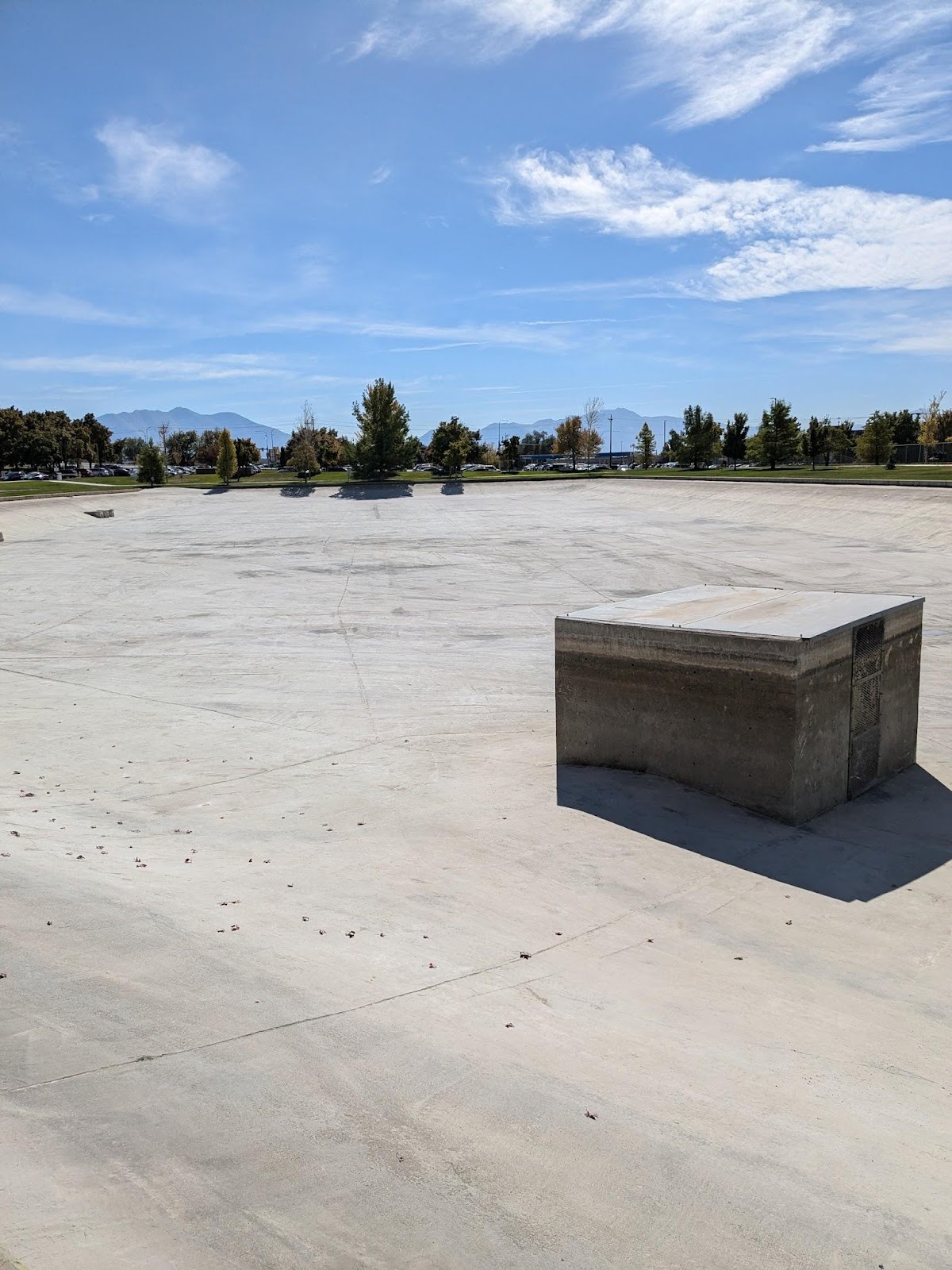
    I love seeing the giant reflection pools outside of the BA building with that water spraying up, and I always wondered how they could justify that water when Utah had drought restrictions. During our sustainability tour, the gentlemen from facilities were able to answer so many of those questions, and really put UVU’s water consumption and conservation into perspective for me.

    I worked for Alpine School District as a head custodian for 9 years between 2013 and 2022. During that time I was in charge of a lot of the same things facilities explained to us on our tour, but on a much smaller scale. My area was just one elementary school as opposed to one University. I had to deal with the water restrictions during dry years, events or soccer games at the last minute and someone calling me to come shut off the water, broken sprinkler lines (and not knowing when one was broken until someone notified me), dying bushes or trees and having to replace them because they were not getting enough water, wind carrying the mist from small sprinklers and so the edges getting brown on small strips off lawn, and so much more. I received one of those fancy digital sprinkler clocks that hooked to my phone and it made my life so much easier. I was able to see weather patterns, and it would turn off the sprinklers when it rained. If a sprinkler broke, it would turn off that section and alert me instead of shooting a giant stream of water straight into the air for hours on end. The new technology was amazing and probably saved the district a lot of money and water. It also saved me a lot of time, energy, and frustration.

    I was able to understand a lot of what they were talking about in the tour as I was one of “them” for many years and loved what I did. I started UVU as a freshman in 1994 (it was UVSC back then) and it has grown a lot in the last 30 years. There are many more buildings, and more grassy areas. There are more parking lots and concrete walkways connecting them all together. As the school is growing in size by building and mass, it is also growing with people and that means more feet that walk over that grass. I think they are really taking all that into account, as they mentioned that they are adding compost to the water that will help the roots become stronger and thicker, to stand up to the extra amount of wear and tear so that it endures more people walking on it, sitting on it, playin on it. They are seeing the bigger picture, and they know they need to keep looking outside of that even further as the school continues to expand, so that they can keep up with technology and sustainability efforts, even if they may seem small.


[Written for SOC 3520 class UVU Fall 2024]
aB . All Rights Reserved . 2024